Perimenopause Nutritionist in San Francisco, CA

Smooth Out Hormonal Swings, Sleep Better, and Feel Steady Through Every Phase of the Transition

San Francisco Perimenopause Nutrition Plans

Perimenopause is the transition phase leading up to menopause — often beginning in your late 30s or 40s and lasting several years. Unlike menopause itself, this stage is defined by fluctuating (not consistently low) hormones, which is why symptoms can feel so unpredictable from one month to the next. As a perimenopause nutritionist, I use a functional, food-first approach to help smooth out the ride and support your body through these early hormonal changes.

Symptoms Our Perimenopause Nutrition Plan Supports

  • Irregular cycles, heavier or lighter periods, and changes in cycle length
  • Mood swings, increased anxiety, and irritability tied to hormonal shifts
  • Sleep disruption and the first signs of night sweats
  • New weight gain — especially around the midsection
  • Brain fog, low energy, and changes in libido
  • Bloating, digestive changes, and new food sensitivities

Personalized Perimenopause Nutrition Plans For Woman in SF, CA

Perimenopause calls for a different strategy than menopause. Because hormones are still cycling — just unpredictably — I focus on supporting your body’s natural rhythms: stabilizing blood sugar, optimizing key nutrients (B vitamins, magnesium, omega-3s), supporting liver detoxification, and reducing inflammatory triggers. The goal is to ease symptoms now and set a strong foundation for the menopausal years ahead.

Already reached menopause? If it’s been 12 or more months since your last period, visit my menopause nutritionist page for support tailored to that stage.

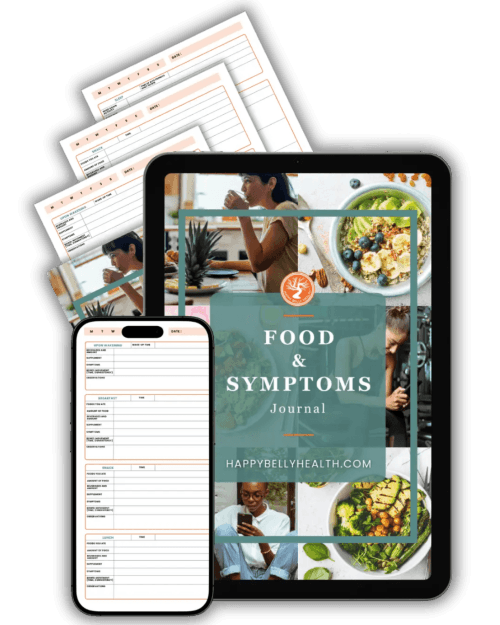
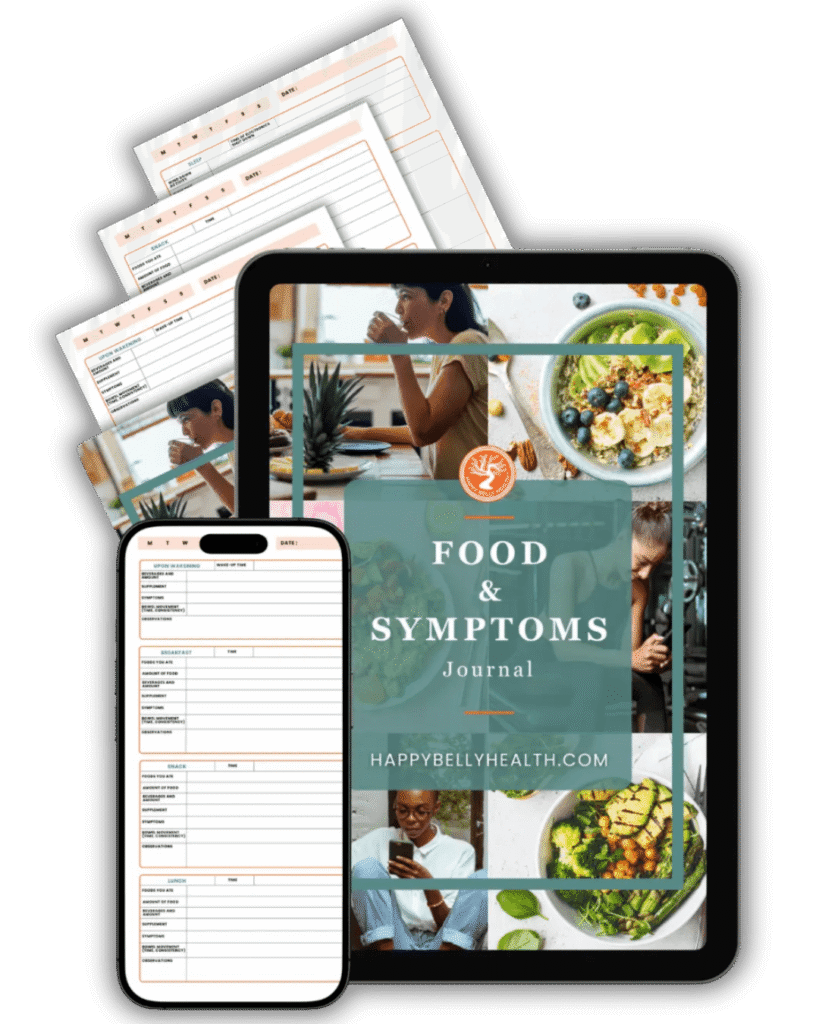
Perimenopause symptoms can feel random — tracking helps reveal patterns.

Bloating, fatigue, cravings, and stubborn weight can feel unpredictable during perimenopause. The free Food & Symptom Journal helps you track what’s changing so you can start seeing patterns more clearly.

Why People Trust Happy Belly Health

San Francisco Perimenopause Nutrition Coaching - My Unique Approach

Tailored to You, Not a Template

I tailor every plan to the individual. You won't get a standardized protocol pulled off a shelf.

Different From What You'd Get Elsewhere

Unlike the generic protocols typically handed out by a naturopath or doctor, your plan is built specifically around your body, history, and goals.

Sustainable, Real-Life Strategies

Practical changes that fit your life — not fad diets or rigid rules you can't maintain.

Direct & Supportive Style

Sensitive to what's unsaid, direct with what needs to be said.

Qualified & Experienced

Perimenopause Nutritionist FAQ

Perimenopause is the transitional phase leading up to menopause, when hormone levels begin to fluctuate and the body starts preparing for the end of reproductive years.

For some women, this transition is relatively mild. For others, it can feel like their body suddenly stopped responding the way it used to.

Many of the women I work with tell me:

  • “I’m doing everything I used to do, and it’s not working anymore.”
  • “I’ve gained weight and can’t lose it.”
  • “My sleep is terrible.”
  • “My energy isn’t the same.”
  • “I don’t feel like myself.”

While changing hormones play a role, many symptoms associated with perimenopause are also influenced by blood sugar regulation, stress, sleep, digestion, inflammation, and overall metabolic health.

Common symptoms include:

  • Weight gain, especially around the midsection
  • Increased belly fat
  • Hot flashes
  • Night sweats
  • Poor sleep
  • Fatigue
  • Brain fog
  • Mood swings
  • Anxiety
  • Irritability
  • Increased cravings
  • Irregular periods
  • Lower stress tolerance
  • Joint aches
  • Reduced exercise recovery

Many women are surprised to learn that symptoms can begin years before menopause officially occurs.

This is one of the most common concerns I hear.

Many women feel frustrated because they’re eating the same foods, exercising the same way, and doing everything they’ve always done—yet the scale continues to climb.

Perimenopause often affects:

  • Insulin sensitivity
  • Blood sugar regulation
  • Stress hormones
  • Sleep quality
  • Muscle mass
  • Recovery capacity

When these systems become dysregulated, the body may store fat more easily and become more resistant to releasing it.

This isn’t a lack of willpower.

It’s often a sign that your body’s physiology has changed and your strategy needs to change with it.

One of the concepts I frequently teach clients is that insulin is one of the body’s primary fat-storage hormones.

As insulin sensitivity declines, the body often becomes more likely to store fat—particularly around the abdomen.

Many women assume belly fat is purely a hormone issue, when in reality blood sugar regulation, stress, sleep, muscle mass, and metabolic health often play a major role.

The good news is that these are areas we can improve.

Many women assume cravings are simply a lack of willpower.

I don’t see it that way.

Cravings are often information.

Perimenopause can affect blood sugar regulation, insulin signaling, stress hormones, sleep quality, and appetite regulation.

As a result, many women notice:

  • Increased hunger
  • More frequent snacking
  • Cravings for bread, chips, crackers, pasta, and other carbohydrates
  • Stronger sugar cravings
  • Feeling “hangry”
  • Difficulty feeling satisfied after meals

One of the most rewarding changes clients experience is discovering that cravings often decrease dramatically when the body receives the nutrients and signals it needs.

Many women are surprised to discover they can go several hours without thinking about food. They no longer feel controlled by cravings, constantly looking for snacks, or wondering where their next source of energy will come from. Instead, they feel satisfied, steady, and more in control of their eating.

Many women tell me they feel like they are running on empty.

They wake up tired, need caffeine to function, experience afternoon crashes, and no longer recover from stress or exercise the way they once did.

While hormone changes can contribute, fatigue and brain fog are often influenced by:

  • Blood sugar instability
  • Poor sleep
  • Chronic stress
  • Inflammation
  • Digestive issues
  • Nutrient deficiencies
  • Inadequate protein intake

The goal isn’t simply boosting energy temporarily.

The goal is understanding why your body is struggling to produce energy in the first place.

Absolutely.

Many women tell me they feel more anxious, reactive, overwhelmed, or emotionally exhausted than they used to.

Hormonal fluctuations can contribute, but so can poor sleep, blood sugar instability, inflammation, chronic stress, and nutrient deficiencies.

As overall health improves, many clients report:

  • Better sleep
  • Less anxiety
  • Improved mood
  • Greater patience
  • Better focus
  • Improved emotional resilience

The goal is helping you feel more like yourself again.

No.

This is one of the biggest misconceptions I see.

Hormones matter, but hormones don’t operate in isolation.

Perimenopause is influenced by:

  • Blood sugar regulation
  • Insulin sensitivity
  • Stress
  • Sleep
  • Inflammation
  • Digestion
  • Nutrition
  • Movement
  • Muscle mass

This is one reason why two women with similar hormone levels may feel completely different.

My approach focuses on supporting the entire system, not just hormones.

Usually not.

Many women come to me already feeling exhausted by diets.

They’ve counted calories, cut carbs, eliminated foods, tracked points, tried intermittent fasting, and followed countless nutrition plans.

My goal isn’t to make your life more restrictive.

My goal is to help you understand what your body needs during this season of life.

There is a difference between eating a healthy diet and eating the right diet for your body.

Sometimes temporary changes are helpful, but I don’t believe in unnecessary restriction.

I want clients to feel confident, flexible, and free around food while still supporting their health goals.

This is one of the most common questions I receive.

Some women notice improvements surprisingly quickly.

Better energy, fewer cravings, improved digestion, more stable moods, and better sleep can sometimes begin within days or weeks of making targeted changes.

That doesn’t necessarily mean the body is fully healed—it often means we’ve identified and removed something that was aggravating symptoms.

But symptom relief and healing are not always the same thing.

True healing is usually reflected in greater resilience: better energy, fewer symptoms, more flexibility around food, improved body composition, and the ability to navigate life without constantly feeling like you’re fighting your body.

The goal isn’t simply to eliminate symptoms temporarily.

The goal is to create the environment your body needs to become more resilient, balanced, and metabolically healthy over time.

Because every woman arrives with a different history, it’s impossible to predict exactly how long the process will take.

What I can say is that many women begin experiencing meaningful improvements long before they reach their final goals.

This is one of the most common questions I hear.

For some women, GLP-1 medications can be a helpful tool for improving blood sugar regulation, reducing cravings, and supporting weight loss.

At the same time, they don’t replace the need for:

  • Adequate protein
  • Strength training
  • Sleep
  • Stress management
  • Healthy digestion
  • Nutrient-dense foods

Whether you choose a GLP-1 medication or not, these foundations remain essential.

My role isn’t to tell you what decision to make.

My role is to help you understand your options and create the strongest foundation for long-term health.

Absolutely.

Many women come to me while taking Ozempic, Wegovy, Mounjaro, or Zepbound.

My role is to help ensure you’re supporting your metabolism, preserving muscle, meeting protein needs, managing side effects, and building habits that support long-term success.

The goal isn’t simply weight loss.

The goal is becoming healthier, stronger, and more resilient.

This is a very individual decision.

Some women experience tremendous benefits from HRT. Others prefer not to use it or may not be candidates for it.

I frequently collaborate with OB-GYNs, primary care physicians, naturopathic doctors, acupuncturists, and other trusted healthcare providers to help ensure clients receive comprehensive support.

Whether you choose HRT or not, nutrition, sleep, stress management, blood sugar regulation, digestion, and lifestyle habits continue to play a major role in how you feel.

This is something I see frequently.

Many women expect HRT to solve every symptom associated with perimenopause.

While HRT can be incredibly helpful for some women, it doesn’t automatically resolve:

  • Insulin resistance
  • Blood sugar instability
  • Poor sleep habits
  • Digestive dysfunction
  • Chronic stress
  • Inflammation
  • Loss of muscle mass
  • Inadequate protein intake

Hormones are one piece of the puzzle.

I’ve worked with women who initially believed their symptoms were primarily hormonal, only to discover that blood sugar regulation, insulin sensitivity, protein intake, sleep, and overall metabolic health were playing a much larger role than they realized.

In some cases, clients have experienced significant improvements in symptoms such as weight gain, cravings, fatigue, poor sleep, brain fog, anxiety, low energy, and difficulty losing weight after improving insulin regulation, increasing protein intake, building muscle, and supporting their overall metabolic health.

A number of those women ultimately found they felt better than expected and were able to work with their healthcare provider to reduce or discontinue hormone therapy that wasn’t providing the benefits they had hoped for.

Others continue using HRT and feel their best when hormone support is combined with nutrition, strength training, sleep optimization, stress resilience, and improved metabolic health.

My goal isn’t to convince you to use HRT or avoid it.

My goal is to help you understand the full picture, identify which symptoms may be driven by hormones, which may be driven by metabolic health, and where those two often overlap.

Many women come to me feeling frustrated because they’ve been told their symptoms are simply part of aging or that they just need to eat less and exercise more.

I understand how discouraging that can be.

My own health journey, combined with more than 15 years of client experience, led me to specialize in gut health, metabolic health, and sustainable weight loss.

Since founding Happy Belly Health in 2010, I’ve worked with countless women who felt stuck, confused, and disconnected from their bodies.

I don’t believe your body is broken.

I believe your body is communicating.

My role is to help you understand those signals and create a personalized plan that supports healing.

Together, we focus on:

  • Blood sugar balance
  • Insulin sensitivity
  • Digestion
  • Sleep
  • Stress resilience
  • Nutrition
  • Sustainable lifestyle habits

I often talk about loving discipline—making choices that align with the healthy, energetic woman you want to become rather than relying on willpower, guilt, or perfection.

The goal isn’t simply surviving perimenopause.

The goal is helping you feel strong, energized, confident, and excited about the next chapter of your life.

Perimenopause can affect every area of life—from your weight and energy to your confidence, relationships, career performance, and quality of life.

At Happy Belly Health, I provide personalized nutrition counseling and health coaching for women navigating weight gain, cravings, fatigue, poor sleep, digestive issues, blood sugar concerns, and other common perimenopause challenges.

Together, we’ll focus on helping your body feel supported, resilient, and capable again.

The goal isn’t just getting through perimenopause.

The goal is helping you thrive through it.

Ready for personalized one-on-one coaching?

Let’s uncover what’s really driving your symptoms and build a plan that fits your life.

Discover What’s Actually Driving Your Symptoms

Track what matters using this 5-minute daily journal and uncover the root cause of bloating, low energy, digestion issues, and stubborn weight—in just 7 days